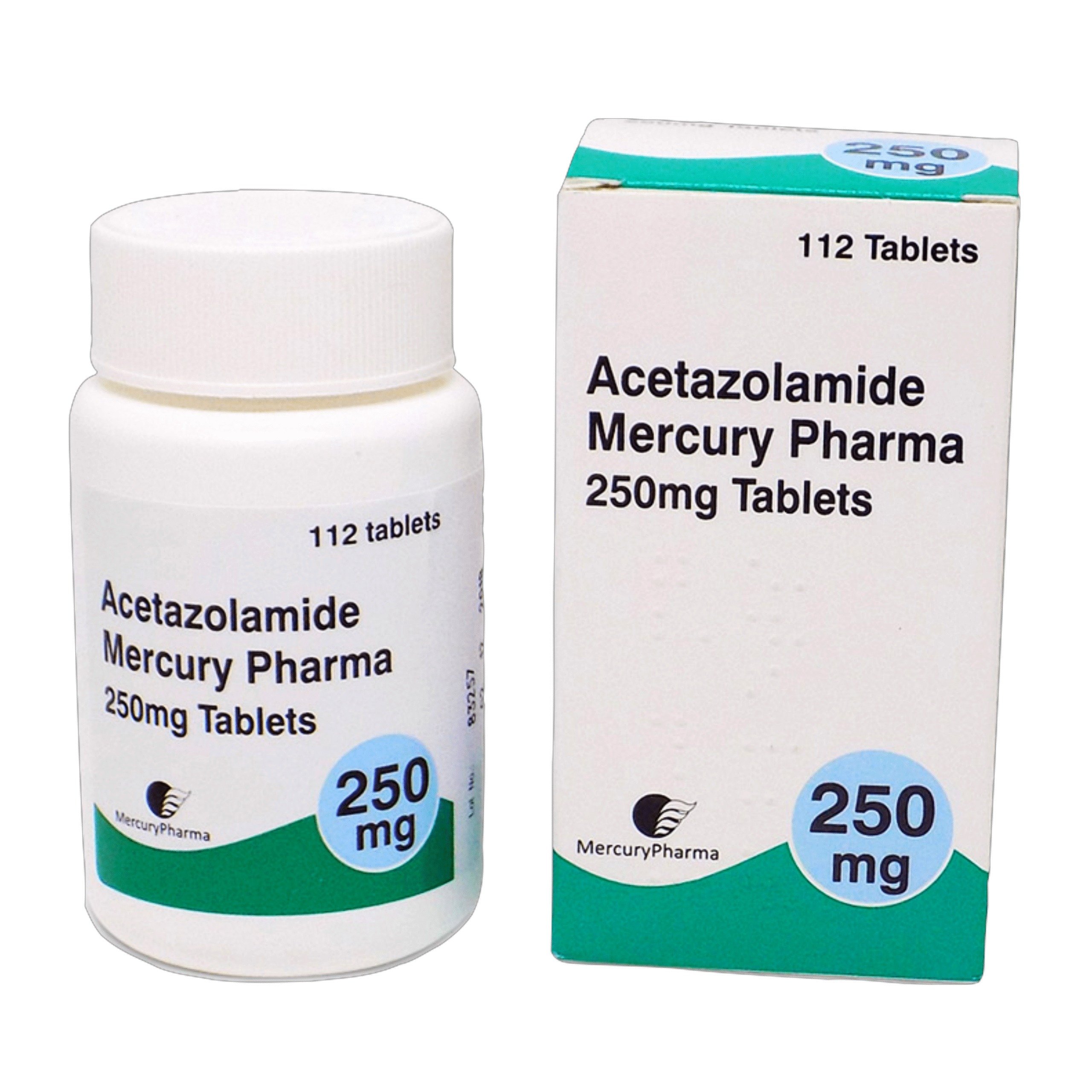
Acetazolamide is a carbonic anhydrase inhibitor used as a diuretic to manage glaucoma, oedema (fluid retention), and acute altitude sickness. It works in the kidneys, eye, and brain to reduce fluid accumulation and pressure.
How It Works
By blocking the enzyme carbonic anhydrase, acetazolamide reduces bicarbonate reabsorption in the kidneys, increasing urine output and decreasing fluid overload. In the eye, it lowers intraocular pressure by reducing aqueous humour production. This makes it effective for glaucoma management and decreases brain fluid build-up associated with altitude sickness.
Why Choose Acetazolamide
It offers versatile use across multiple conditions—glaucoma, fluid retention, epilepsy adjunct, and altitude sickness—while having a quick onset of action. The tablet form allows easy daily dosing, and because it crosses the blood-brain barrier, it’s highly effective in neurological conditions like idiopathic intracranial hypertension.
Important Note
Ensure regular monitoring of kidney function, electrolytes (especially potassium), and blood pH for long-term use. Do not use if allergic to sulfonamides or with severe kidney or liver disease. Stay well hydrated, especially with higher doses, and avoid strenuous activity in extreme heat to prevent dehydration.
Directions
Always follow the patient information leaflet before use.
-
Dosage:
-
Glaucoma: 250 mg to 1 g daily in divided doses.
-
Edema: 250–375 mg daily, adjusted based on response.
-
Altitude sickness: 125–250 mg twice daily, starting a day before ascent.
-
How to take: Swallow whole with water; can be taken with food.
-
Safety tips: Maintain hydration; do not stand up quickly to avoid dizziness.
-
Storage: Store below 25 °C in original packaging, shielded from light/moisture, and safely away from children.
Deprecated: Function wc_enqueue_js is
deprecated since version 10.4.0! Use wp_add_inline_script instead. in
/var/www/vhosts/pharmacymentordemo.com/crosshills.pharmacymentorbuilds.com/wp-includes/functions.php on line
6131
Ingredients
-
Active Ingredient: Acetazolamide (commonly 250 mg per tablet)
-
Inactive Ingredients: May include lactose, maize starch, magnesium stearate, and sodium starch glycolate. Refer to packaging for full details.
Deprecated: Function wc_enqueue_js is
deprecated since version 10.4.0! Use wp_add_inline_script instead. in
/var/www/vhosts/pharmacymentordemo.com/crosshills.pharmacymentorbuilds.com/wp-includes/functions.php on line
6131
Side Effects
Common Side Effects:
Serious Side Effects:
If any symptoms occur, contact your GP or healthcare provider immediately.
Deprecated: Function wc_enqueue_js is
deprecated since version 10.4.0! Use wp_add_inline_script instead. in
/var/www/vhosts/pharmacymentordemo.com/crosshills.pharmacymentorbuilds.com/wp-includes/functions.php on line
6131
Warnings
-
Contraindications: Allergy to sulfonamides; severe kidney or liver disease; adrenal gland insufficiency.
-
Cautions: Dehydration risk, diabetes, respiratory acidosis, impaired kidney function.
-
Age restriction: Use with caution in the elderly.
-
Pregnancy/Breastfeeding: Only if clearly necessary and closely monitored.
-
Drug Interactions: May interact with digoxin, lithium, diuretics, corticosteroids—monitor closely.
Deprecated: Function wc_enqueue_js is
deprecated since version 10.4.0! Use wp_add_inline_script instead. in
/var/www/vhosts/pharmacymentordemo.com/crosshills.pharmacymentorbuilds.com/wp-includes/functions.php on line
6131